Best Hair Straightener Temperature for Every Hair Type (2026 Guide)
“What temperature should I straighten my hair at?”
Too much heat can cause:
dryness
split ends
breakage
fading colour
frizz
long-term hair damage
But using temperatures that are too low can also create problems — forcing you to go over the same section of hair multiple times, which can actually increase heat exposure.
The key is choosing the right temperature for your specific hair type.
In this guide, we’ll explain:
the safest temperatures for each hair type
how heat affects hair
common mistakes people make
how to reduce damage while still achieving sleek, salon-quality results
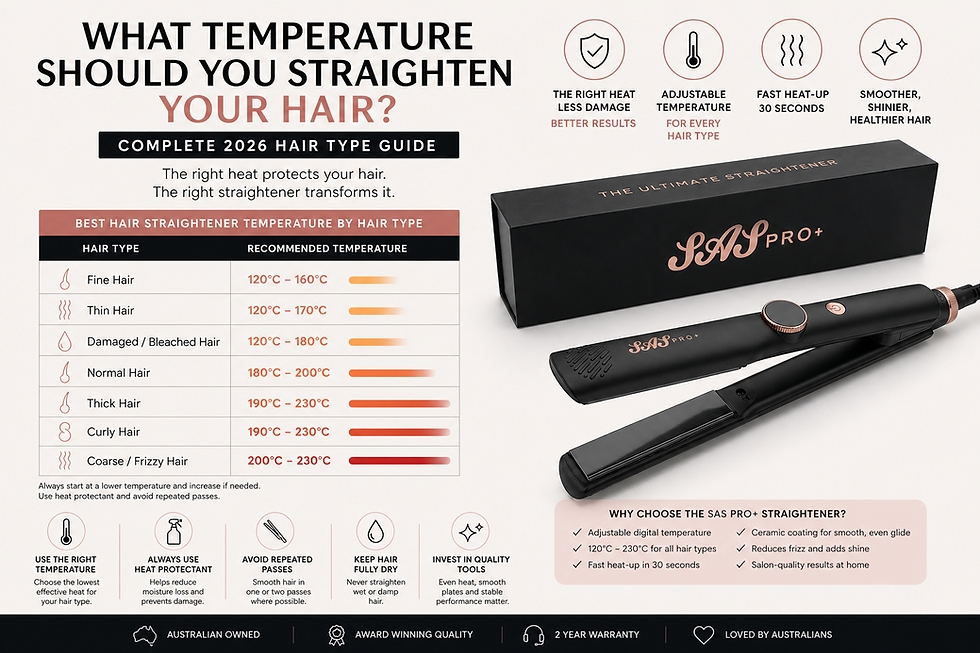
Quick Answer: Best Hair Straightener Temperature by Hair Type
Hair Type | Recommended Temperature |
Fine Hair | 120°C – 160°C |
Thin Hair | 120°C – 170°C |
Damaged or Bleached Hair | 120°C – 180°C |
Normal Hair | 180°C – 200°C |
Thick Hair | 190°C – 230°C |
Curly Hair | 190°C – 230°C |
Coarse or Frizzy Hair | 200°C – 230°C |
The best temperature depends on:
hair thickness
hair health
texture
whether your hair is coloured or chemically treated
Why Hair Straightener Temperature Matters
Hair is made from a protein called keratin. Excessive heat weakens the hair cuticle and removes moisture from the hair shaft.
Signs of heat damage include:
rough texture
dullness
increased frizz
breakage
split ends
difficulty holding styles
Using the correct temperature helps minimise unnecessary stress on the hair while still achieving smooth results efficiently.
High-quality hair straighteners with stable heat control — such as the SAS Professional Hair Straightener range — can also help reduce repeated passes, lowering overall heat exposure during styling.
Best Temperature for Fine Hair
Recommended:
120°C – 160°C
Fine hair is more delicate and heats quickly. High temperatures can damage it very fast.
If you have fine hair:
start at the lowest setting
increase gradually only if needed
avoid repeated passes
Many people with fine hair mistakenly use maximum heat when lower temperatures can often achieve the same result safely.
Tips for Fine Hair
Use ceramic plates for even heat distribution
Always apply heat protectant
Work in smaller sections
Limit styling frequency where possible
Straighteners with adjustable temperature settings and smooth ceramic-style performance are generally better suited for fine or fragile hair types.
Best Temperature for Thick Hair
Recommended:
190°C – 230°C
Thicker hair usually requires more heat because the strands are denser and harder to style.
However, high heat alone is not enough — plate quality also matters.
A high-quality straightener with stable heat distribution often performs better at lower temperatures than cheaper tools running excessively hot.
For thick or frizzy hair, many Australians prefer titanium plate straighteners like the SAS Pro+ range because they maintain consistent heat and glide through dense hair more efficiently.
Tips for Thick Hair
Section hair properly
Use slow, controlled passes
Avoid repeatedly going over the same section
Choose wider plates for faster styling
Best Temperature for Curly Hair
Recommended:
190°C – 230°C
Curly hair often requires higher temperatures to fully smooth the hair cuticle.
But curly hair can also become dry more easily, making heat protection extremely important.
Tips for Curly Hair
Fully dry hair before straightening
Use ionic technology to reduce frizz
Apply lightweight heat protection spray
Use fewer passes with a quality straightener
Many professional-grade straighteners designed for curly hair now combine fast heat-up technology with floating plates to improve styling efficiency while helping minimise snagging and breakage.
Best Temperature for Damaged or Bleached Hair
Recommended:
120°C – 180°C
Bleached, coloured, or chemically treated hair is far more vulnerable to heat damage.
High temperatures can worsen:
dryness
breakage
elasticity loss
colour fading
Lower heat combined with a premium straightener usually delivers safer long-term results.
Tips for Damaged Hair
Never use maximum heat
Deep-condition regularly
Use ceramic or floating plates
Avoid daily straightening where possible
Straighteners with adjustable digital temperature control — like the SAS Professional range — make it easier to avoid overheating delicate hair.
Is 230°C Too Hot?
230°C is generally considered the upper limit for hair straightening.
While some hair types tolerate high temperatures better than others, maximum heat should usually be reserved for:
very thick hair
coarse hair
highly resistant curls
For many people, lower temperatures can achieve similar results with less damage.
In many cases:
Better technique and better plates matter more than extreme heat.
Common Hair Straightening Mistakes
1. Using Too Much Heat
Many people assume higher temperatures always work better.
In reality, excessive heat often causes:
dryness
frizz
split ends
breakage
2. Straightening Wet or Damp Hair
Hair is most vulnerable when wet.
Applying direct heat to damp hair can cause severe damage to the cuticle.
Always ensure hair is fully dry before using a traditional hair straightener.
3. Skipping Heat Protectant
Heat protectants help reduce moisture loss and minimise heat exposure.
Even high-quality straighteners should still be used with protection products.
4. Repeated Passes
Going over the same section repeatedly increases cumulative heat exposure.
A quality straightener with smooth floating plates and stable temperatures can often straighten hair effectively in fewer passes.
5. Using Cheap Plates
Uneven heat distribution can create hot spots that damage hair.
Quality ceramic or titanium plates generally provide:
smoother glide
more consistent temperatures
faster styling
reduced frizz
This is one reason many salon-quality straighteners — including SAS Hair Straighteners — focus heavily on stable plate performance rather than simply increasing heat output.
Ceramic vs Titanium: Which Is Better for Temperature Control?
Ceramic Plates
Best for:
fine hair
damaged hair
everyday styling
Benefits:
even heat distribution
gentler styling
reduced hot spots
Titanium Plates
Best for:
thick hair
coarse hair
curly hair
Benefits:
faster heat transfer
quicker styling
strong performance on resistant hair
The best option depends on your specific hair type and styling needs.
Many modern salon-grade straighteners now combine advanced plate coatings, ionic technology, and adjustable heat systems to improve styling results across multiple hair types.
How to Straighten Hair With Less Damage
To minimise heat damage:
use the lowest effective temperature
apply heat protectant
avoid repeated passes
clean plates regularly
use quality styling tools
avoid straightening wet hair
deep-condition regularly
Consistent hair care matters just as much as the straightener itself.
Using a quality hair straightener with adjustable heat settings, fast heat recovery, and smooth plate technology can also help improve results while reducing unnecessary stress on the hair.
Frequently Asked Questions
What is the safest temperature for hair straightening?
For most people, 180°C or below is considered safer for regular styling, especially for fine or damaged hair.
Does higher heat make hair straighter?
Not always. Better plate quality and technique are often more important than extreme heat.
Can low temperatures still damage hair?
Yes. Repeated passes at lower temperatures can still cause cumulative heat damage over time.
Should I use 230°C every day?
Daily use of maximum heat is generally not recommended, especially for coloured or damaged hair.
Final Thoughts
The best hair straightener temperature depends entirely on your hair type, texture, and condition.
Using the correct heat setting can help:
reduce damage
minimise frizz
improve shine
create longer-lasting styles
maintain healthier hair over time
For most people, the goal should not be using the highest possible temperature —it should be achieving the best results with the least amount of heat necessary.
At SAS Hair, we recommend choosing a salon-quality hair straightener with adjustable temperature control, stable heat performance, and smooth plate technology to help achieve sleek, healthy-looking hair with less damage.


Comments